Al Ain Oasis, nestled in the heart of Al Ain city in the Emirate of Abu Dhabi, is a remarkable blend of natural beauty, history, and culture. Spanning over 1,200 hectares, it is the largest oasis in the city and forms part of the UNESCO-recognized Cultural Sites of Al Ain. The site provides a peaceful retreat for tourists, offering shaded palm groves, flowing waterways, and a glimpse into the traditional desert way of life. Beyond its serene landscapes, the Oasis represents a living museum of ancient agricultural practices, sustainable water management, and cultural heritage. Visitors from around the world come here not just to enjoy its beauty, but to learn about how humans have adapted to the harsh desert environment over thousands of years.
Historical and Cultural Significance
Ancient Origins
Al Ain Oasis has been a vital part of the region for over 4,000 years. Its survival and development have always depended on water, a precious resource in the desert. The oasis thrives due to the ingenious falaj irrigation system, an ancient method of distributing water from underground springs to agricultural fields. This system transformed barren desert lands into fertile groves, enabling humans to cultivate crops and sustain communities.
Tourists walking through the Heritage site can witness how this traditional technique continues to support life, offering insight into the resilience and resourcefulness of past generations. Ancient settlements, mud-brick houses, and watchtowers still stand as reminders of the oasis’s long-standing importance.
UNESCO Recognition
In 2011, UNESCO recognized the site as part of the World Heritage Sites, acknowledging its universal value. This designation highlights the oasis’s role in demonstrating traditional desert living, sustainable agriculture, and human adaptation to environmental challenges. For travelers, this adds an international prestige factor, making it not just a local landmark but a globally significant cultural destination.
The Falaj Irrigation System: A Living History
Ingenious Water Management
The heart of the oasis is its falaj system, a network of channels that efficiently distributes water to crops and palm trees. Visitors can stroll along shaded pathways following these channels, witnessing the flowing water and learning about this age-old engineering marvel. Guided tours often include detailed explanations about how the system reduces evaporation and supports agriculture in harsh desert conditions.
Preservation of Tradition
Remarkably, the falaj system remains functional today. Tourists can see first-hand how water flows from underground sources to irrigate date palms and other crops. The continuing use of this ancient method demonstrates the oasis community’s dedication to preserving sustainable practices, offering tourists both a visual and educational experience.
Biodiversity and Agricultural Tourism
Lush Desert Haven
Despite being in an arid region, Al Ain Oasis is home to over 147,000 date palms across more than 100 varieties. Visitors are often surprised to find other crops like mangoes, bananas, figs, and jujubes thriving alongside these palms. This biodiversity makes the location a natural paradise for nature lovers, photographers, and eco-tourists seeking a unique desert experience.
Sustainable Farming Experiences
Visitors can engage with farmers and learn about traditional irrigation and farming methods. These interactive experiences allow tourists to understand the delicate balance between agriculture and desert ecosystems. Many guided tours include activities such as planting saplings or tasting fresh dates, making it both fun and educational for families.
Cultural and Architectural Highlights
Traditional Structures
Throughout the Heritage site, traditional mud-brick homes, watchtowers, and fortified farms are scattered, offering tourists a tangible connection to the past. These structures highlight the defensive and residential practices of earlier generations and provide excellent photography opportunities for visitors.
The Oasis Eco-Centre
The Eco-Centre, opened in 2016, is a major highlight for tourists. It offers interactive exhibits that explain the oasis’s history, the falaj system, and its biodiversity. Visitors can explore a miniature model of the oasis, watch short documentaries, and participate in educational workshops about sustainable farming and desert ecosystems. The Eco-Centre is ideal for families, school groups, and travelers seeking a deeper understanding of the oasis’s cultural and ecological importance.
Visitor Experience
Walking Tours and Scenic Pathways
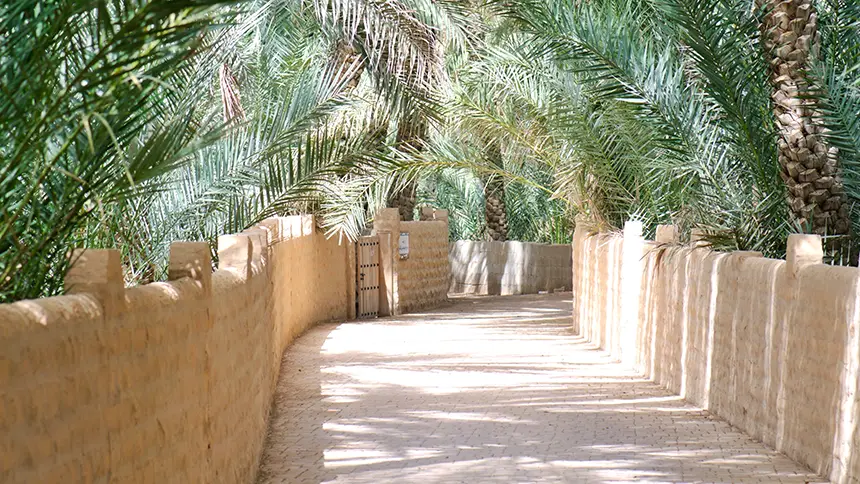
Tourists can enjoy shaded walking trails that wind through the palm groves and along falaj channels. The gentle flow of water, rustling palm fronds, and the desert’s natural sounds provide a tranquil retreat from urban life. Walking tours often include explanations about different palm varieties, traditional irrigation techniques, and the history of the oasis.
Bicycle and Electric Buggy Tours
For a more active experience, visitors can rent bicycles or electric buggies to explore larger areas of the oasis. These tours are perfect for photography enthusiasts and families with children, offering convenient access to the oasis’s farthest corners.
Guided Educational Programs
The Eco-Centre and local tour operators offer guided programs and workshops. These activities teach visitors about sustainable farming, water conservation, and the historical significance of the oasis. Educational tours are suitable for all ages and provide an immersive, hands-on learning experience.
Seasonal Highlights and Events
Spring and Autumn Visits
The best time to visit is during spring and autumn, when the weather is mild, and the palm groves are at their most vibrant. Tourists can enjoy walking or cycling without the extreme heat of summer.
Date Harvesting Festivals
Visitors planning their trips during the date harvesting season can participate in seasonal festivals. These events showcase traditional agricultural practices, local music, crafts, and food. Tourists can taste fresh dates, learn about date cultivation, and even join harvesting activities under supervision.
Cultural Celebrations
The oasis often hosts cultural workshops and art exhibitions related to Emirati traditions. These events provide tourists with opportunities to experience local crafts, folklore, and storytelling, further enriching their visit.
Tourism and Conservation
Challenges Facing the Oasis
Despite its popularity, the Oasis faces challenges from urban expansion, climate change, and water scarcity. Encroaching development threatens the natural landscape and traditional farming areas, making conservation efforts essential.
Preservation Initiatives
To maintain its status as both a heritage and tourist site, authorities have implemented several measures.
- Restoring falaj channels to ensure continued water flow
- Maintaining traditional farming practices while introducing sustainable innovations
- Managing visitor impact through guided tours and designated pathways
- Educational campaigns to raise awareness about environmental protection
These initiatives ensure that tourists can enjoy the oasis while preserving it for future generations.
Practical Tips for Tourists
- Best Time to Visit: Early mornings or late afternoons in spring or autumn.
- Entry Requirements: Tickets may be needed for the Eco-Centre; walking through open areas is usually free.
- Activities: Walking tours, cycling, buggy rides, photography, and seasonal workshops.
- Nearby Attractions: Al Ain National Museum, Al Jahili Fort, and Al Ain Palace Museum for a full cultural itinerary.
- Family-Friendly Options: Shaded picnic spots, interactive workshops, and guided tours suitable for all ages.
- Sustainability Tips: Carry water, avoid littering, and follow designated paths to help preserve the oasis.
Conclusion
Al Ain Oasis is a living museum, offering visitors a combination of natural beauty, cultural heritage, and educational experiences. Its UNESCO designation, thriving palm groves, traditional irrigation system, and rich biodiversity make it a must-visit destination for both local and international tourists.
The Cultural landscape shows how humans can live in harmony with nature, preserving cultural heritage while embracing sustainable practices. From peaceful walks and interactive workshops to seasonal festivals and educational programs, this place provides something for everyone.