The United Arab Emirates is a country known for its modern skyline, luxurious lifestyle, and rich cultural heritage. Among the many aspects of Emirati culture, food plays a central role. The national cuisine reflects the country’s history, geography, and traditions, offering a blend of flavors influenced by Arabian, Persian, Indian, and African cultures. One of the most significant elements of this cuisine is rice, a staple ingredient in many traditional meals. These culinary preparations in the UAE are not only nourishing but also represent hospitality, family gatherings, and cultural identity.
Importance of Rice in Emirati Cuisine
Rice has been an essential part of Emirati diets for centuries. It arrived in the region through trade routes connecting the Arabian Peninsula with India, Persia, and East Africa. Over time, grains became a staple, often paired with meat, fish, or vegetables.
Why rice is important in UAE culture
- Symbol of Hospitality: Serving traditional meals to guests is a sign of generosity.
- Versatility: They can be cooked with spices, herbs, and proteins to create varied flavors.
- Cultural Tradition: Certain recipes are served during festivals, weddings, and special occasions.
- Nutritional Value: Rich in carbohydrates, rice provides energy and is easily digestible.
Families in the UAE often consider a perfectly cooked grain dish as a measure of culinary skill. Each region in the UAE may have its own variation, but all emphasize flavor, aroma, and presentation.
Popular UAE Rice Dishes
Several traditional meals stand out in the Emirati culinary tradition. Each dish has unique flavors and reflects historical and cultural influences.
Al Machboos
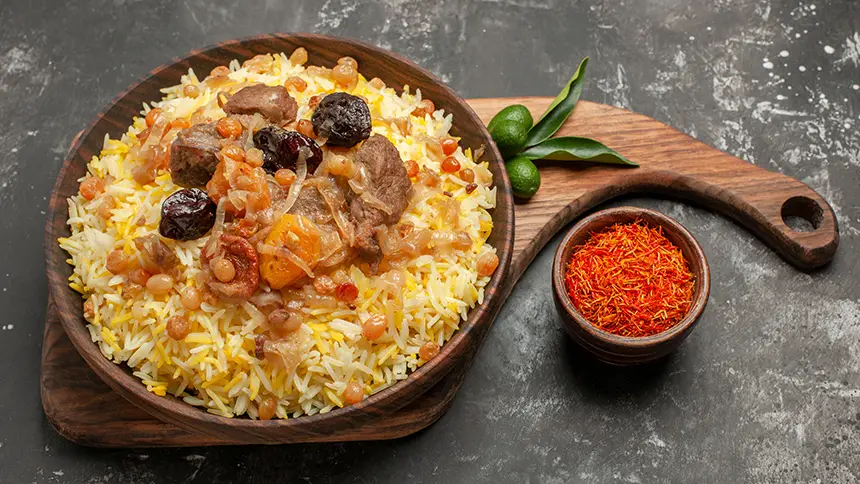
Al Machboos, sometimes called Machbus or Majboos, is one of the most famous Emirati rice dishes. It is a spiced dish usually served with chicken, lamb, or fish.
Ingredients
- Basmati
- Meat or fish
- Onions and garlic
- Tomatoes
- Emirati spices (Loomi – dried black lime, turmeric, cinnamon, cardamom)
- Ghee or vegetable oil
Cooking Method
- Meat or fish is marinated with spices and sautéed with onions and tomatoes.
- Basmati is added and cooked in the seasoned broth.
- The dish is left to simmer until the flavors are absorbed.
The aroma comes from a mix of traditional spices and dried lime, giving the dish its distinctive flavor. It is served during family gatherings and celebrations, often accompanied by salad or yogurt.
Al Harees with Rice
Al Harees is a classic Emirati dish typically made with wheat and meat, but a variant that includes rice. The dish is slow-cooked to create a creamy texture.
Ingredients
- Basmati or coarsely ground wheat
- Meat (usually chicken or lamb)
- Ghee or butter
- Salt and spices (cumin, cinnamon)
- Water
Cooking Method
- Meat is cooked slowly in water with spices until tender.
- Basmati is added gradually, absorbing the meat’s flavor.
- The mixture is stirred continuously to achieve a soft, porridge-like consistency.
This dish is often prepared during Ramadan and Eid celebrations and requires slow cooking, sometimes for hours. It is traditionally cooked in clay pots to achieve an authentic flavor.
Al Madrooba Rice
Al Madrooba is a fish-based rice dish popular among coastal communities in the UAE. Its origins lie in the country’s fishing culture.
Ingredients
- White fish (usually kingfish or hammour)
- Basmati
- Tamarind paste or dried lemon for tanginess
- Garlic, onions, and spices
- Ghee or oil
Cooking Method
- Fish is boiled with spices to make a broth.
- Basmati is cooked in the fish broth for enhanced taste.
- Tamarind or dried lemon is added for a slightly sour flavor.
This traditional dish, often served during family gatherings, highlights the Emirati coastal heritage and is frequently garnished with nuts or fried onions.
Al Majboos with Dates
While grains are usually paired with savory flavors, some Emirati dishes include sweet elements. Al Majboos with dates combines rice, sugar, and dried fruits, creating a festive dessert.
Ingredients
- Basmati
- Dates or raisins
- Sugar or honey
- Cardamom and saffron
- Ghee
Cooking Method
- Basmati is lightly toasted in ghee.
- Sweeteners and dried fruits are added while cooking.
- The mixture is simmered until soft and aromatic.
This dish is often served during Eid and other celebrations, representing the fusion of sweet and savory in Emirati cuisine. It is also a nutritious and energy-rich meal.
Cultural Significance of Rice Dishes
Emirati culinary preparations are not just meals, they are a reflection of community and culture.
Cultural Roles
- Family Gatherings: Large meals are shared during weddings, Eid, and other celebrations.
- Hospitality: Offering these preparations to guests is a symbol of generosity and respect.
- Heritage: Recipes are often handed down from parents to children, preserving culinary traditions.
- Regional Variations: Coastal areas emphasize fish, while inland regions use lamb or chicken.
These meals often serve as the centerpiece of a meal, bringing families together and reinforcing cultural bonds.
Modern Adaptations
While traditional dishes remain popular, contemporary chefs in the UAE have introduced modern twists. Examples include using quinoa or brown rice for health-conscious consumers, incorporating international flavors like lemon zest, rosemary, or chili, offering vegetarian versions with mushrooms, lentils, or vegetables, and creating fusion dishes in high-end restaurants that blend UAE culinary traditions with global cuisines. These innovations allow Emirati cuisine to evolve while still respecting its roots.
Serving and Presentation
Presentation is important in Emirati dining culture, with rice dishes often served on large platters for sharing. They are typically placed in the center of the table with meat or fish arranged on top, garnished with fried onions, almonds, or raisins, and accompanied by yogurt, salads, or pickled vegetables. Serving with traditional Emirati bread completes the meal, as visual appeal is considered as important as taste, reflecting hospitality and respect for guests.
Health Benefits of Emirati Rice Dishes
Traditional dishes are nutritious when balanced with proteins, vegetables, and moderate spices.
Health Benefits
- Energy-Rich: it provides carbohydrates for sustained energy.
- Protein Source: Meat, fish, or legumes add essential proteins.
- Vitamins and Minerals: Spices like turmeric, cardamom, and Loomi have antioxidant properties.
- Digestive Aid: Many dishes use herbs that support digestion.
When prepared mindfully, Emirati rice meals can be a wholesome part of a balanced diet.
Conclusion
Emirati rice dishes are much more than food, they are a celebration of history, culture, and hospitality. From the spiced Al Machboos to the creamy Al Harees, every dish tells a story of tradition, family, and local ingredients. Rice symbolizes generosity, community, and cultural pride in the UAE. It connects generations and reflects the country’s rich heritage influenced by diverse cultures.
For anyone exploring Emirati cuisine, traditional meals are a perfect starting point. They combine taste, aroma, and tradition in a way that embodies the heart of the UAE. Whether enjoyed at home with family, during a festival, or at a restaurant, these meals offer a genuine taste of Emirati life.