Stretching across the southern Arabian Peninsula lies one of Earth’s most extraordinary natural wonders, the Rub’ al Khali, also known as the Empty Quarter. It is the largest continuous sand desert in the world, spanning Saudi Arabia, Oman, the United Arab Emirates, and Yemen.
The vast golden dunes have long captivated explorers and dreamers alike. It is rich with hidden stories, from ancient caravan routes and Bedouin tales to discoveries of lost oases and fossil remains. Today, this immense desert represents the spirit of adventure and the wild beauty of Arabia, offering travelers not just a visit, but a journey into history itself.
A Landscape Beyond Imagination
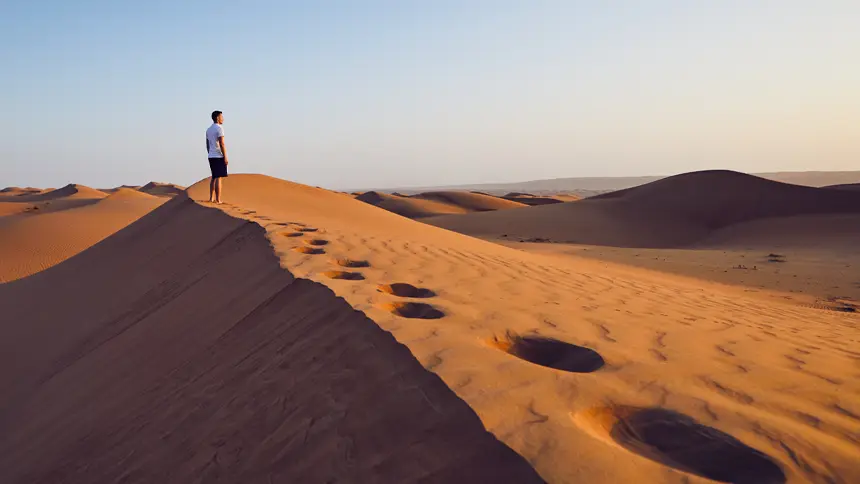
Covering over 650,000 square kilometers, Rub’ al Khali is a vast world of shifting dunes that can rise more than 250 meters high. Its glowing sands, deep silence, and intense heat create a landscape both harsh and captivating. Constantly changing with the wind, the Empty Quarter offers a rare sense of peace and freedom, a place that invites quiet reflection amid its endless beauty.
A Journey Through History
For thousands of years, this place has been a silent witness to the journeys of traders and explorers who once crossed its vast dunes with caravans carrying frankincense, myrrh, and spices to distant markets. Beneath the sands lie traces of ancient civilizations, including the legendary city of Ubar, often called the “Atlantis of the Sands.” Once thought to exist only in myth, its ruins, discovered through satellite imagery and excavation, reveal a thriving past buried by time and shifting sands.
The Bedouin tribes who have long-lived around here have mastered the art of survival in its harsh environment. Their nomadic way of life follows the movement of the seasons, their hospitality turns every guest into family, and their deep knowledge of stars and winds guides them across endless horizons. This enduring culture reflects the heart of Arabia, one built on resilience, respect, and harmony with the desert.
Modern Exploration and Discovery
Although it was long seen as impenetrable, modern explorers have managed to uncover many of its secrets. The desert first drew international attention in the 1930s when British explorer Bertram Thomas became the first Westerner to cross it. His journey revealed not only the landscape’s grandeur but also its scientific and cultural importance.
Scientific Insights
Today, satellite imaging and geological studies have shown that Rub’ al Khali once contained ancient river systems and lakes, suggesting that thousands of years ago, it was a green, fertile area teeming with life. Fossils of animals like hippos and water buffalo have been found, a reminder of how Earth’s climate has transformed over time.
Oil and Transformation
In the 20th century, beneath the sands of the Empty Quarter, massive oil reserves were discovered. This changed the fate of Arabia, leading to rapid development across the Gulf region. Yet, despite these modern changes, large sections of it remain untouched, preserving their natural purity.
Adventure Tourism
In recent years, Rub’ al Khali has become a destination for ecotourism and adventure travel. It attracts explorers, photographers, and thrill-seekers who want to experience the majesty of nature in its rawest form.
Popular Activities
- Desert Safaris: Guided expeditions using 4×4 vehicles take travelers deep into the dunes for breathtaking views and sunset photography.
- Camel Treks: Slow, traditional journeys that allow visitors to travel as Bedouins once did.
- Sandboarding: Sliding down high dunes is a favorite among adventure enthusiasts.
- Camping Under the Stars: Nights here are magical. With no city lights nearby, the sky becomes a dome filled with countless stars.
- Wildlife Watching: Arabian oryx, gazelles, and desert foxes can occasionally be spotted near oases and rocky outcrops.
Luxury Desert Retreats
For those who prefer comfort, several luxury resorts on the edges of Rub’ al Khali, especially in Liwa (UAE) and Salalah (Oman), offer guided tours, cultural experiences, and stargazing sessions. These retreats blend modern amenities with authentic desert charm, creating a balance between adventure and relaxation.
Cultural Experiences Worth Trying
A visit to the Empty Quarter is more than a visual experience, it’s a journey into Arabia’s living traditions. Travelers can witness the grace of falconry, enjoy rhythmic music and dance that echo the spirit of nomadic life, and savor local dishes like slow-cooked lamb, camel milk, and warm flatbreads. Evenings under the stars bring storytelling sessions where Bedouin elders share tales of travelers and lost cities. These cultural moments transform a desert visit into a meaningful connection with history and heritage.
Flora and Fauna: Life in a Harsh Land
Life here thrives against all odds. Oases nurture date palms, while desert grasses and acacia trees add rare splashes of green to the golden landscape. The Arabian oryx, sand gazelle, and desert fox move gracefully across the dunes, and migratory birds occasionally fill the skies. Each plant and creature has adapted to survive with little water, showing how nature maintains balance even in this harsh and silent wilderness.
Travel Tips for Visitors
- Respect the Environment: Avoid littering, off-track driving, or disturbing wildlife.
- Use Licensed Guides: Local experts ensure safety and minimize environmental impact.
- Conserve Resources: Water is precious, use it wisely.
- Learn Before You Go: Understanding the cultural and natural significance deepens your experience.
- Leave No Trace: Take only photographs and memories.
By traveling mindfully, visitors help protect this remarkable landscape and support the communities living near it.
How to Visit
It can be accessed from several countries.
Best Access Points
- Liwa, UAE: Just a few hours from Abu Dhabi, Liwa offers guided desert tours, luxury camps, and easy access to the northern edges of it.
- Salalah, Oman: A beautiful coastal gateway to the desert, especially attractive during the green “khareef” season.
- Shaybah, Saudi Arabia: Deep within the Empty Quarter, home to a unique desert community and striking dune formations.
Best Time to Visit
- November to March: Cooler months with pleasant temperatures.
- April to October: Extremely hot, suitable only for experienced travelers or organized expeditions.
Always check travel regulations, weather forecasts, and required permits before planning your trip.
Photography Paradise
For photographers, it is a living canvas of light and shadow. The golden dunes shift shapes with every breeze, glowing in rich hues at sunrise and sunset. Even the simplest scenes, a lone camel, a single tree, or untouched footprints, can create striking images. Capturing the desert’s vastness during the golden hour, using wide-angle lenses, and protecting equipment from sand ensures every shot reflects its breathtaking beauty.
Conclusion
The Empty Quarter is not truly empty, it’s full of life, history, and timeless wonder. It whispers the stories of explorers, merchants, and nomads who once crossed its golden seas of sand.
In a world that moves too quickly, the Empty Quarter offers rare stillness and peace. More than a destination, it teaches simplicity, patience, and respect for nature’s strength. For those seeking an experience beyond the ordinary, a journey through Rub’ al Khali leaves a lasting impression, one that remains long after the desert sand is gone.