Sand art shows have grown into one of the most fascinating performance styles in the Middle East. With only light, music, and grains of sand, artists craft stories that touch the heart in seconds. Each movement of the hand reshapes the scene, creating an emotional journey for people watching. Though this form looks simple, it blends skill, imagination, and timing in a way that feels almost magical.
What Is Sand Art Performance?
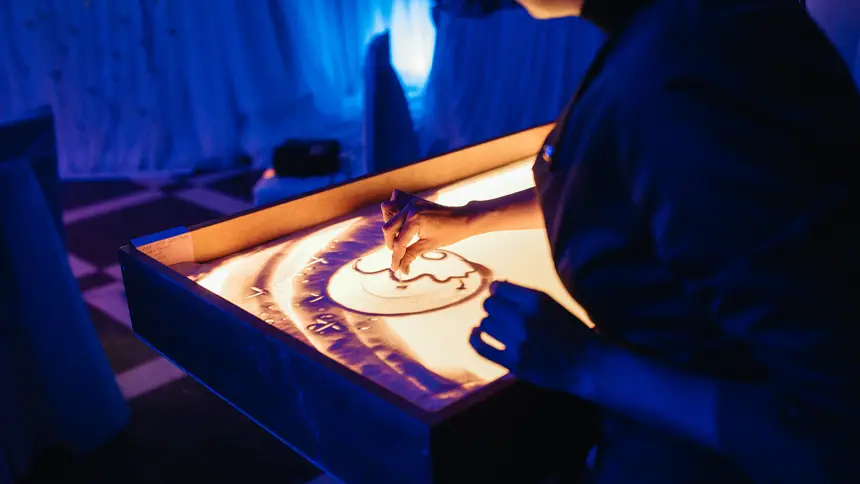
It is a live storytelling act where an artist draws pictures on a lit glass table covered with sand. A camera above the table captures every stroke and projects it on a large screen. As the artist moves the grains, one image transforms smoothly into another, creating a sequence of scenes like a film made by hand.
Key Elements Involved
- Light and shadow: Light below the glass makes the forms sharp and dramatic.
- Moving images: Drawings shift continuously, allowing moments to flow into new stories.
- Music: Background sound adds emotion and rhythm.
- Timing: Each gesture must match the mood and pace of the story.
In a world dominated by digital screens, this art stands out because it uses physical material and real-time creativity, giving audiences an experience that feels honest and intimate.
Origins of the Style
The roots of this art stretch across Asia and Europe, but it found a special place in the Middle East, where it evolved into a refined performance craft. Its growth in the region was driven by a deep storytelling culture, strong pride in visual expression, rising demand for fresh entertainment formats, and support from festivals and public events. With artists willing to explore new hybrid styles, sand art resonated naturally with audiences, reflecting the region’s long-standing love for narrative and symbolism.
How Artists Create These Stunning Shows
An artist trains for years to gain full control over the grains. They must understand how much sand to use, how to shade areas, and when to remove or add lines to keep the sequence smooth. Behind every gesture are many hours of practice.
Steps in a Typical Performance
- Layering the sand – A thin, even layer provides the base. It must be smooth enough to allow crisp lines.
- Sketching the first image – Artists form the initial picture with fingertips, palms, or tools.
- Transitioning to the next scene – This is the most challenging part. A single swipe can turn a portrait into a building, or a landscape into an animal.
- Building drama with shading – Thicker areas create darker tones; lighter areas come from removing sand.
- Finishing with a strong final frame – The last image often delivers the emotional message of the entire act.
Common Tools
- Hands and fingertips
- Brushes
- Small sticks
- Combs
- Blowers for dramatic clearing effects
Even though tools help, the true power comes from the artist’s ability to guide emotions through motion.
Themes in Middle Eastern Sand illustration
Performances from the region often include topics that resonate deeply with audiences. Each drawing becomes a window into shared values or lived experiences.
Popular Themes
- Heritage scenes – Traditional homes, markets, desert landscapes, and camels highlight local identity.
- Historical journeys – Many shows celebrate leaders, explorers, and key moments that shaped the region.
- Family and unity – Scenes showing parents, children, and celebrations reflect cultural warmth.
- Modern growth – Skyscrapers, innovation, and technological progress symbolise national ambition.
- Festivals and spiritual occasions – Ramadan nights, Eid gatherings, or other religious moments appear frequently.
Because the sand changes quickly, artists can combine old and new ideas within a single sequence, creating a moving link between past and present.
Why Audiences Love Sand Art
Audiences love this art form because it feels alive, with images forming and shifting in moments, creating a sense of wonder and surprise. Its emotional impact, unique flow, and blend of music, lighting, and visuals make each show special. The art form is easy to understand, connects strongly with local culture, and fits a wide range of occasions, from weddings to major public events, adding to its growing popularity.
Role in Middle Eastern Entertainment Industry
It has become a regular feature across entertainment programs in the region. It brings diversity to live performances and fits well with cultural festivals as well as modern celebrations.
Where It Is Commonly Featured
- National celebrations
- Tourism events
- Theatre shows
- Weddings
- Corporate launches
- Cultural festivals
- Award ceremonies
- Charity galas
Event planners appreciate its flexibility. A performance can be tailored to represent a company’s brand, a family story, or a national milestone.
Notable Middle Eastern Artists
Many talented performers across the region have played a major role in popularising sand art, gaining recognition through television shows, festivals, and social platforms. What sets outstanding artists apart is their smooth transitions, ability to express emotion instantly, strong storytelling skills, precision, speed, and consistent quality. Even though each performer has a unique style, they all share the same strength: creating an emotional connection with audiences within moments.
Technology and Modern Enhancements
While the art form remains rooted in hand-drawn technique, modern technology has greatly expanded its impact. High-resolution projectors, large LED screens, improved sound systems, and live-streaming allow artists to reach wider audiences with clearer visuals and richer atmosphere. Some performers also blend golden grains with water, coloured lighting, or interactive elements for added depth. These innovations keep this art fresh and exciting while maintaining its handcrafted beauty.
Why Sand storytelling Matters Culturally
It is more than a performance; it is a cultural bridge. It connects heritage to the present. Every show reflects values such as unity, generosity, respect, and resilience.
Cultural Contributions
- Preserves traditional stories in a fresh way
- Encourages creative careers among young people
- Promotes appreciation for local symbols
- Supports the wider entertainment economy
- Strengthens identity through art
Its combination of simplicity and richness makes it an ideal medium for communicating deep messages without using spoken words.
The Future
As the Middle East continues to invest in cultural and entertainment growth, Sand storytelling is set to evolve even further. With more venues, festivals, and creative spaces emerging, artists will have greater freedom to explore advanced techniques and new directions. Future trends may include larger stage setups, interactive shows, collaborations with dancers or musicians, international tours, and a new generation of young performers bringing fresh styles. Beyond entertainment, this art can expand into education, therapy, tourism, and digital media. Thanks to its adaptability, it is likely to remain a meaningful and emotionally engaging art form for years to come.
Conclusion
Sand drawing performances have become a proud and captivating entertainment style across the Middle East. With only light, sound, and simple grains, artists create powerful stories that audiences remember long after the show ends. This art connects traditions with modern creativity, bringing people together through images that move and transform right before their eyes. As new artists join the field and technology improves, sand art will continue to grow, offering fresh ideas while staying true to the spirit of storytelling. In simple terms, it is a beautiful reminder that even the smallest materials can create big emotions when guided by skilled hands.