Food has always played a powerful role in Emirati culture, especially during weddings. These grand occasions are not only about uniting two families but also about celebrating heritage, hospitality, and tradition. In the United Arab Emirates, weddings are known for their lavish spreads that showcase local flavors, spices, and recipes passed down through generations. Each dish tells a story of community, generosity, and the importance of sharing meals together.
The Role of Food in Emirati Weddings
In Emirati society, food is far more than just nourishment, it is a symbol of hospitality, generosity, and unity. During weddings, this value reaches its highest expression. Guests are treated like royalty, and the menu reflects both deep-rooted traditions and a sense of abundance. Every meal served during these grand occasions represents warmth, respect, and the joy of sharing.
Hospitality plays a vital role in these gatherings. Serving generous portions of food is considered a gesture of love and care, showing appreciation toward guests who have come to celebrate the union. Tradition also holds great importance, as most dishes are prepared using ancient recipes and cooking methods passed down through generations. This connection to the past ensures that cultural heritage remains alive at every wedding feast.
Another key element is the sense of community. Preparing for such events often brings family members together in the kitchen, where everyone contributes to the cooking process. This teamwork not only strengthens family bonds but also highlights the collective spirit of Emirati life. The celebration itself becomes complete when the aroma of freshly cooked dishes fills the air, creating an atmosphere of happiness and excitement.
The Wedding Banquet Setting
Before diving into the dishes, it’s important to understand how a typical Emirati wedding meal is arranged.
- Timing: Traditionally, the feast happens after the formal ceremony.
- Seating: Meals are often served in large communal platters, allowing everyone to eat together.
- Service Style: Traditionally, men and women dine separately, but modern weddings may combine both sections.
- Décor and Ambience: Gold-plated serving trays, aromatic incense, and rosewater often accompany the dining setup.
Such arrangements make the dining experience more than a meal. It has become a social and cultural ritual.
Signature Emirati Wedding Dishes
Let’s explore the most beloved dishes served during these grand occasions, each carrying deep cultural and emotional meaning.
Al Machboos (Traditional Spiced Rice)
One of the stars of any Emirati wedding menu is Al Machboos, a rich and flavorful rice dish cooked with meat, chicken, or fish.
Ingredients and Preparation
- Long-grain rice (usually basmati)
- Meat such as lamb or chicken
- Spices like cardamom, cloves, cinnamon, saffron, and dried lime (Loomi)
- Tomatoes, onions, and garlic
Meaning and Tradition
Machboos represent harmony, as the blend of spices mirrors the unity of diverse elements in their life. It’s served on huge platters, symbolizing generosity.
Al Majboos Al Lahm (Lamb Majboos)
This version focuses purely on lamb, cooked slowly until tender and infused with deep flavors.
Key Highlights
- Often cooked in large pots to feed many guests.
- The aroma of saffron and Loomi fills the air, enhancing the festive mood.
- Served with salads, yogurt, or date chutney for balance.
The lamb is a sign of prosperity and respect, making it an essential part of any wedding banquet.
Al Harees (Wheat and Meat Porridge)
A deeply traditional dish, Al Harees is both simple and symbolic. It is made by cooking ground wheat and meat (usually chicken or lamb) for hours until it reaches a smooth, porridge-like texture.
Special Features
- Requires patience and skill, showing care for guests.
- Lightly seasoned with salt or ghee, highlighting natural flavors.
- Often served at both weddings and Ramadan feasts.
Harees represents humility and nourishment, two values central to Emirati hospitality.
Al Madrooba (Fish Stew)
For coastal families, fish dishes hold special significance. Madrooba is made from salted fish mixed with flour and spices to form a thick stew.
Ingredients
- Salted fish (usually kingfish)
- Flour or crushed wheat
- Garlic, turmeric, and cumin
- Ghee for richness
Cultural Value
This dish connects people to the UAE’s fishing heritage, celebrating the close bond between the people and the sea.
Al Luqaimat (Sweet Dumplings)
A wedding is not complete without dessert, and Luqaimat is the ultimate favorite. These golden, round dumplings are crispy outside and soft inside.
What Makes It Special
- Made from flour, yeast, sugar, and saffron.
- Deep-fried and drizzled with date syrup or honey.
- Often flavored with cardamom or sesame seeds.
Symbolism
Luqaimat stands for joy and sweetness, marking the happy union of two lives.
Balaleet (Sweet Vermicelli with Egg)
An interesting mix of sweet and savory, Balaleet is served either for breakfast or as a light wedding dessert.
Ingredients
- Vermicelli cooked with sugar, cardamom, and saffron
- Topped with a thin layer of omelet
Why It’s Popular
It combines both flavor worlds, sweet and salty, symbolizing balance and harmony in marriage.
Khameer and Chebab (Traditional Breads)
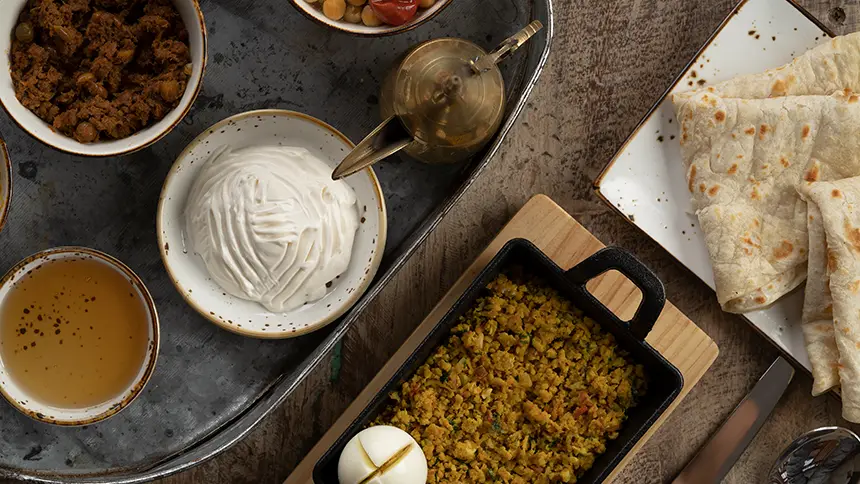
No Emirati meal is complete without bread, and weddings feature special types such as Khameer (yeasted flatbread) and Chebab (Emirati pancakes).
Features
- Khameer is often served with dates and honey.
- Chebab is flavored with saffron and cardamom.
- Served with cream or cheese as accompaniments.
These breads symbolize warmth and the comfort of home, making guests feel truly welcome.
Gahwa (Arabic Coffee) and Dates
At every Emirati wedding, Arabic coffee, known as Gahwa, plays a vital role. It is not just a drink but a cultural ritual.
Preparation and Serving
- Made with lightly roasted coffee beans, cardamom, and saffron.
- Poured into small cups (finjan) and served with dates.
- Always offered by the youngest male host, following traditional etiquette.
Meaning
Serving Gahwa represents respect, generosity, and peace. The offering of coffee and dates marks the beginning and end of every Emirati celebration.
Importance of Sharing and Presentation
Presentation holds deep meaning in Emirati wedding feasts. Food is arranged beautifully to show pride and care.
Cultural Etiquette
- Guests usually eat with their right hand, using pieces of bread or fingers.
- Elders are served first as a mark of respect.
- Everyone eats from the same platter, reinforcing equality and unity.
Visual Appeal
- Gold and silver platters.
- Garnish with nuts, saffron, and raisins.
- Traditional serving stands are called siniya.
This attention to detail reflects the Emirati belief that serving food is both an art and a blessing.
The Symbolism Behind Emirati Wedding Food
Every item on the wedding table carries emotional and cultural meaning.
- Rice and Meat: Prosperity and strength.
- Sweet Dishes: Happiness and love.
- Coffee and Dates: Friendship and welcome.
- Bread: Stability and comfort.
Together, they express the values of family, generosity, and gratitude that lie at the heart of Emirati culture.
Conclusion
Emirati wedding food is more than a feast. It’s a celebration of culture, love, and identity. From aromatic Machboos to sweet Luqaimat, every dish carries a story of history and heart. The way families cook together, serve guests, and share meals reflects the nation’s values of generosity and unity.
Even as modern influences enter the scene, the soul of Emirati cuisine remains unchanged, warm, welcoming, and full of meaning. These dishes continue to connect generations, turning every wedding into a delicious journey through tradition and togetherness.