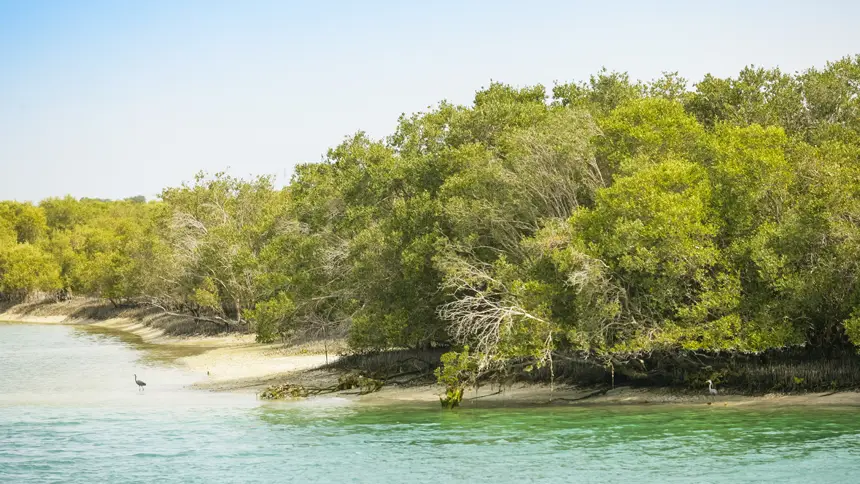
Mangrove Forests of Umm Al Quwain are a hidden natural wonder of the United Arab Emirates and an important destination for eco-tourism. These forests grow along quiet coastal lagoons and are made up of salt-tolerant trees that survive in seawater and protect the shoreline from erosion. They provide a safe habitat for many forms of wildlife, including flamingos, herons, fish, crabs and other marine species. Eco-tourism in the UAE helps people enjoy nature while protecting the environment, and this emirate’s mangroves are a perfect example of this balance. Unlike crowded cities such as Dubai and Abu Dhabi, the region is peaceful and less developed, making it ideal for nature study and outdoor learning. The mangroves also play an important role in reducing carbon dioxide, improving air quality and supporting coastal ecosystems. They show how conservation and tourism can work together to protect nature for students and visitors every day.
What Makes UAQ Mangrove Forests Special?
What makes the mangrove forests of this area special is their calm lagoons, dense green trees and clean, untouched environment. These mangroves grow in shallow coastal waters and form narrow natural waterways that look peaceful and beautiful throughout the year. Unlike the busy and crowded emirates of Dubai and Abu Dhabi, the territory remains quiet and less developed, allowing visitors to enjoy nature without noise or pollution.
The pristine waterways support many plants and animals and create a rich natural landscape that is perfect for birdwatching, photography and nature walks. These forests are also important for slow and sustainable travel because they encourage people to explore gently without harming the environment. The mangroves help protect the coastline from strong waves and provide breeding areas for fish and crabs. This makes the mangrove reserve one of the best eco-tourism destinations in the UAE for students and nature lovers.
A Haven for Wildlife and Biodiversity
The mangrove forests of the emirate are a haven for wildlife and biodiversity and play an important role in protecting many living creatures. These forests are home to a wide variety of birds, fish and marine life that depend on the mangroves for food and shelter. Migratory birds, including flamingos and herons, visit this area during the winter months, making it a popular place for birdwatching in the UAE.
The tangled roots of mangrove trees act as a natural nursery for young sea creatures, helping small fish, crabs and shrimp grow safely away from strong waves and predators. Visitors may also spot turtles and rays swimming quietly through the shallow waters. This rich ecosystem supports the balance of nature and keeps coastal waters healthy. Because of its high biodiversity, the reserve is an important site for conservation, environmental education and eco-tourism in the United Arab Emirates.
Eco-Tourism Activities for Visitors
Eco-tourism activities in the mangrove forests of the region allow visitors to enjoy nature while protecting the environment. One of the most popular activities is kayaking through the narrow mangrove channels, where people can quietly explore the calm waterways without disturbing wildlife. Birdwatching and nature photography are also common, as the area is home to flamingos, herons and many other bird species. Guided nature walks and eco-trails help students and tourists learn about mangrove trees, marine life and the importance of conservation.
These walking paths are designed to be safe and environmentally friendly. Popular activities include kayaking, photography and peaceful walks through the rich natural landscape. Such activities support sustainable tourism and teach visitors to respect nature. By taking part in eco-tourism, people can understand how mangroves protect the coastline and support biodiversity, making the mangrove area an ideal destination for outdoor learning and responsible travel in the UAE.
Environmental Importance of Mangroves
Mangrove forests in this part of the UAE are not only beautiful but also extremely important for the environment. Their dense roots help protect coastlines from erosion by slowing down waves and stabilising the soil, acting as natural barriers against storms and strong tides. Mangroves also absorb large amounts of carbon dioxide from the air, helping to fight climate change and improve air quality. These forests support marine ecosystems by providing safe breeding grounds for fish, crabs and other sea creatures, which keeps coastal waters healthy.
In addition, mangroves produce oxygen and maintain the balance of nature in their surroundings. Because of these benefits, mangroves are often called climate protectors and natural storm barriers. Conserving them is essential for the UAE’s environment and biodiversity. Visiting these forests teaches people the value of nature and how eco-tourism can help protect such vital ecosystems for future generations.
Best Time and Tips for Visiting
The best time to visit the mangrove forests of the emirate is between November and March, when the weather is cooler and more pleasant for outdoor activities. Early morning or sunset visits are ideal, as the temperatures are comfortable and wildlife, such as flamingos and herons, is more active, making it perfect for photography and birdwatching. Visitors should always respect nature by avoiding littering and not disturbing the plants or animals.
It is recommended to wear light and comfortable clothing and shoes suitable for walking along trails or paddling in kayaks. Carrying water and sunscreen is important to stay hydrated and protected from the sun. By following these tips, students, families and eco-tourists can enjoy a safe and enjoyable experience while helping to preserve the mangrove forests. Responsible behaviour ensures that these natural areas remain clean, peaceful and thriving for future visitors.
Future of Eco-Tourism in Umm Al Quwain
The future of eco-tourism in the region looks very promising, as the government and local communities are working hard to protect the mangrove forests while promoting responsible tourism. New eco-trails and nature reserves are being developed to allow visitors to explore the area safely without harming the environment. These projects aim to balance tourism with conservation, ensuring that wildlife and natural habitats are preserved for future generations. Educational programmes are also being introduced to teach students and tourists about the importance of mangroves, biodiversity and sustainable practices.
Local communities are increasingly involved in these efforts, helping to guide tours, monitor wildlife and support conservation projects. By combining government initiatives, community participation and eco-friendly tourism, the mangrove forest areas are setting an example of how nature, education and recreation can work together. This vision ensures that the forests will continue to thrive as a unique eco-tourism destination in the UAE.
Conclusion
The mangrove forests of Umm Al Quwain are a true eco-tourism paradise, offering a peaceful escape into nature’s beauty while supporting rich wildlife and healthy ecosystems. They provide opportunities for kayaking, birdwatching, nature walks and learning about the environment, making them perfect for students, families and nature lovers. Visiting these forests responsibly helps protect the delicate habitats, ensures that wildlife thrives, and preserves the natural landscape for future generations. Sustainable travel, such as following eco-trails, avoiding littering, and respecting animals and plants, is essential to maintain the mangroves’ beauty and environmental importance. By exploring the green forests thoughtfully and respectfully, travellers can enjoy an unforgettable experience while contributing to conservation efforts. These forests remind us that tourism and nature can exist in harmony, creating a model for responsible travel across the UAE and beyond.