Sharjah Heritage District is one of the most important cultural areas in the United Arab Emirates. Sharjah is often called the Cultural Capital of the UAE because it has always worked hard to protect history, art, and traditional customs. While cities in the UAE are growing quickly with modern buildings and technology, Sharjah has made sure that its past is not forgotten. In today’s modern world, many traditional ways of life are disappearing. This makes heritage preservation more important than ever. By protecting old buildings, crafts, and stories, a country can keep its identity alive and help young people understand where their society comes from. The purpose of the historic neighbourhood is to preserve and share the true spirit of Emirati culture. Through restored houses, museums, narrow alleys, and traditional markets, the district allows visitors to experience how people lived in the past. It serves as a living reminder of the nation’s history and plays a key role in keeping Emirati traditions alive for future generations.
History of Sharjah Heritage District
The history of the cultural quarter reflects the Emirate’s strong desire to protect its cultural identity. The district began as an area filled with old neighbourhoods where families lived, traded, and gathered for daily activities. These homes and markets were built many decades ago, during a time when Sharjah was a small coastal community. Before modernisation, the traditional Emirati lifestyle was simple and closely connected to nature. People lived in houses made from coral stone, mud, and palm wood, which kept them cool during the hot summers. Men often worked as fishermen, pearl divers, or traders, while women took care of the home, cooked, and made crafts such as weaving and perfume. Life was based on cooperation, hospitality, and strong family values.
As the UAE developed rapidly, many old areas began to disappear. To protect these precious memories, the Sharjah government launched major efforts to restore old houses, narrow alleys, markets, and mosques. Skilled workers carefully repaired the buildings using traditional materials so the preserved zone would look as it did in the past. Today, this restored site stands as a living museum, helping students and visitors understand how Emiratis lived long before modern buildings, cars, and technology arrived.
Architectural Highlights
Traditional Building Materials
Traditional Emirati architecture used natural materials that were suitable for the hot desert climate. Coral stone was taken from the sea and used to build strong walls that kept homes cool. Palm fronds, called arish, were used to make roofs and simple shelters because they provided shade and allowed air to pass through. Mud and gypsum were mixed to create smooth walls and floors, giving houses a clean and bright appearance. These materials were easy to find, affordable, and helped people live comfortably long before modern construction methods arrived.
Notable Structures
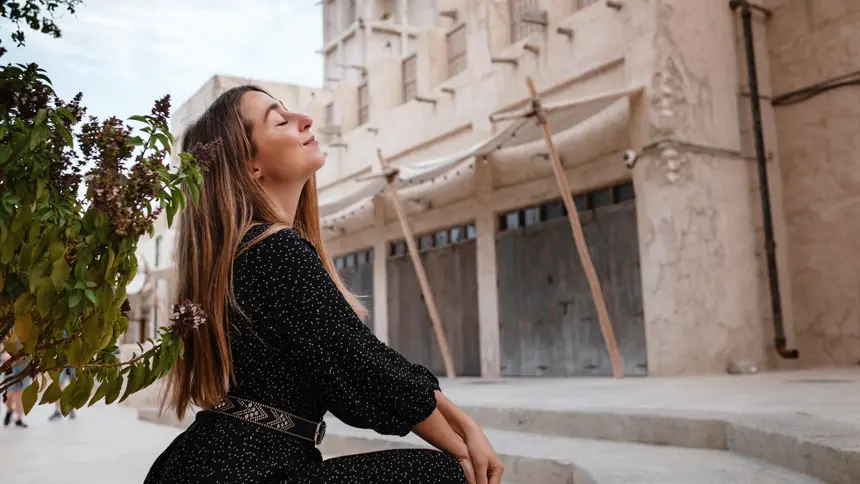
The heritage area is home to several important traditional buildings. One of the most famous is Al Midfa House, known for its tall wind tower, which worked like a natural air conditioner by catching cool breezes and guiding them into the rooms below. Many restored courtyard houses can also be seen, built around open spaces where families gathered for meals and evening conversations. In addition, the traditional district includes mosques with simple designs, low doorways, and peaceful prayer areas. These structures show the beauty and practicality of early Emirati architecture.
Cultural Attractions
Museums
The heritage zone includes several museums that help visitors learn about Emirati history and culture. The Sharjah Heritage Museum displays traditional clothing, jewellery, tools, and stories that show how people lived in the past. The Calligraphy Museum celebrates the beauty of Arabic writing and showcases artworks created by talented calligraphers. Nearby, the Sharjah Art Museum offers a wider cultural experience, with paintings and exhibitions from the UAE and other countries. Together, these museums help students and tourists understand the artistic and cultural achievements of the Emirates.
Souqs
Traditional markets, or souqs, are an important part of the district’s charm. Souq Al Arsah is one of the oldest markets in the UAE and is famous for its peaceful atmosphere, wooden ceilings, and shops selling spices, handicrafts, and perfumes. Walking through the souq feels like stepping back in time. Close to the area is Souq Al Shanasiyah, a beautifully restored market that combines tradition with a modern touch. It features cafés, small shops, and local products, making it a popular place for families and visitors. Both souqs help preserve the trading culture that has shaped Emirati life for generations.
Cultural Activities and Experiences
The old-town district offers a variety of cultural activities and experiences that help visitors learn about the traditional lifestyle of the Emirates. One of the most popular attractions is the traditional craft workshops, where people can watch or try activities such as pottery, weaving, and perfume making. These workshops show how Emiratis created everyday items by hand before modern machines existed. Visitors can also enjoy storytelling and folk performances, where skilled performers share old tales, songs, and dances that have been passed down through generations. These performances help keep the country’s cultural stories alive.
The area also hosts heritage festivals and guided tours, especially during special events and holidays. These tours are led by experts who explain the history of the buildings, the meaning behind old customs, and the importance of preserving traditions. Another interesting experience is the demonstrations of pearl diving tools and Bedouin traditions. Pearl diving was once a major occupation in the UAE, and the tools used by divers show how challenging the job was. Bedouin demonstrations, such as setting up desert tents and showing traditional clothing, help visitors understand life in the desert. Together, these activities make the heritage quarter a living classroom full of learning and culture.
Importance of the Heritage District
The cultural district is very important because it helps preserve the Emirati identity and customs that have shaped the nation for hundreds of years. In a rapidly changing world, many traditions can easily fade away, but the district keeps them alive through its restored buildings, museums, and cultural activities. It also plays a key role in educating younger generations, allowing students to see how their ancestors lived, worked, and celebrated special occasions. By learning about traditional crafts, architecture, and stories, young people gain a deeper understanding of their culture and feel more connected to their roots.
The area is also valuable because it attracts cultural tourism. Visitors from around the world come to explore the old souqs, wind-tower houses, and museums, bringing more attention to the history of the Emirates. This helps support local businesses and encourages more investment in cultural preservation. Most importantly, this historic site connects the past with the present. It shows how modern life in the UAE has grown from strong traditions and values. Walking through its narrow lanes and historic buildings reminds people that progress is important, but remembering one’s heritage is equally essential. This balance keeps the spirit of the Emirates alive.
Conclusion
In conclusion, the traditional quarter holds great cultural value because it protects the traditions, skills, and way of life that shaped the early Emirates. By restoring old buildings, preserving historical objects, and keeping traditional crafts alive, the district helps people understand the rich history that lies behind the country’s modern achievements. Sharjah has shown strong leadership in heritage conservation, making it a role model in the UAE and the wider region. The emirate’s efforts prove that progress and tradition can exist side by side.
Protecting historical sites is essential for future generations. These places are not just old structures; they are living lessons that teach young people about identity, resilience, and community. When students and visitors walk through the cultural area, they gain a deeper appreciation of the nation’s roots. By safeguarding these treasures today, we ensure that the spirit of the Emirates continues to shine for many years to come.